Interview Best Practices
Tips for getting the most out of AI-powered interviews: preparation, stakeholder selection, and follow-up strategies.
Follow these best practices to maximize the value of your AI interviews.
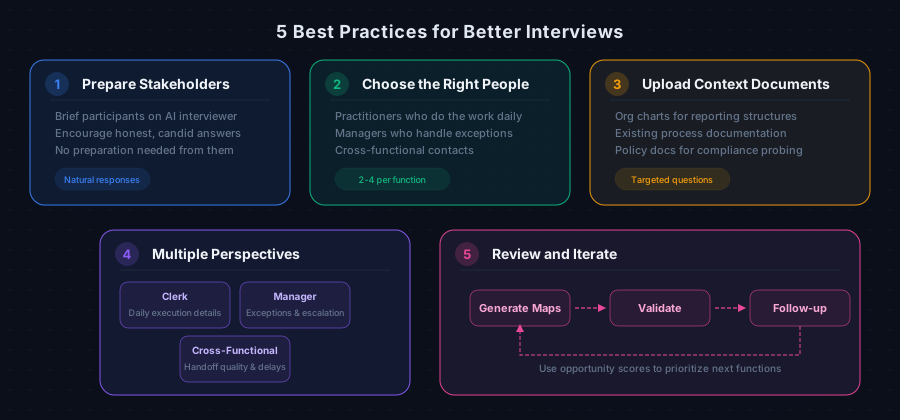
Prepare Your Stakeholders
Before the interview:
- Brief participants — Let them know an AI will be conducting the interview and that it's about understanding their daily work, not evaluating performance
- Encourage honesty — The most valuable insights come from candid descriptions of workarounds, pain points, and frustrations
- No preparation needed — Stakeholders don't need to prepare documents or slides. The AI works best with natural, unscripted responses
Choose the Right People
For each business function, interview:
- Practitioners — People who do the actual work daily
- Managers — People who oversee the process and handle exceptions
- Cross-functional contacts — People who hand off to or receive from the function
Interviewing 2–4 people per function typically provides comprehensive coverage.
Upload Context Documents
Before conducting interviews, upload relevant organizational documents:
- Organization charts help the AI understand reporting structures
- Existing process documentation provides baseline knowledge
- Policy documents reveal compliance requirements the AI should probe
The AI uses these documents to ask more targeted, relevant questions.
Multiple Interviews Per Function
Don't rely on a single interview. Different stakeholders see different parts of the process:
- A clerk sees daily execution details
- A manager sees exception handling and escalation paths
- A cross-functional partner sees handoff quality and delays
The platform synthesizes all perspectives into a comprehensive process map.
Review and Iterate
After generating process maps:
- Review outputs with stakeholders to validate accuracy
- Conduct follow-up interviews for areas that need deeper exploration
- Use the opportunity scores to prioritize which functions to analyze next